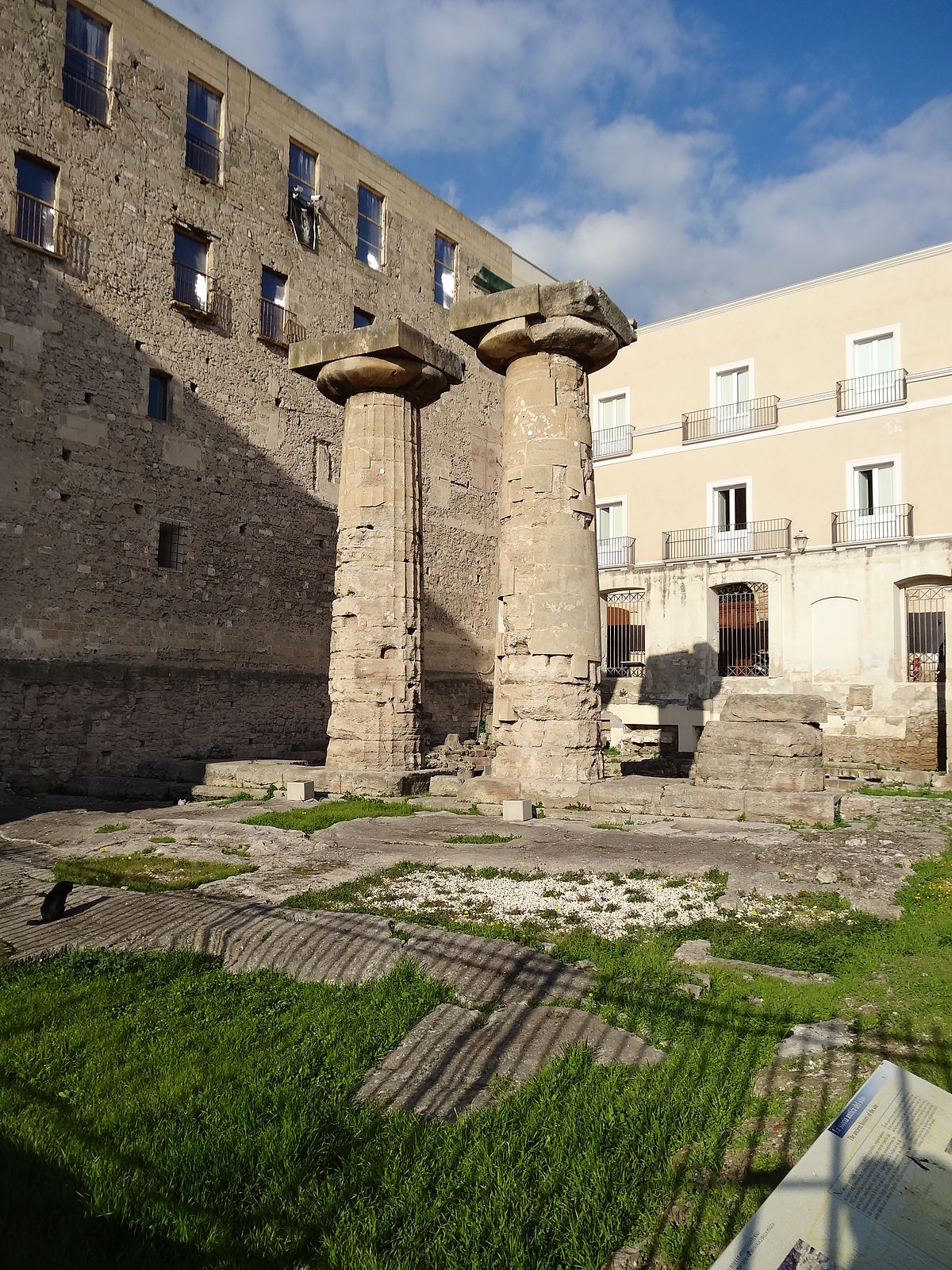


Temple of Poseidon
Overview
The Temple of Poseidon, located in the coastal city of Taranto in the Apulia region of Italy, is an archaeological site that offers a fascinating glimpse into the ancient Greek world and its influence on the Mediterranean. This historic temple, dedicated to Poseidon, the Greek god of the sea, is not only a significant remnant of classical architecture but also a symbol of the rich cultural heritage of Taranto, which was founded by Greek settlers. Visitors to the site can explore the remains of the temple, which once stood as a venerated place of worship, while enjoying the picturesque surroundings that reflect the unique coastal landscape of southern Italy.
The significance of the Temple of Poseidon extends beyond its architectural elements; it serves as a reminder of the ancient Greek presence in the region and the interactions between different cultures in the Mediterranean. As one of the key sites in Taranto, it attracts both history enthusiasts and casual travelers alike, providing an enriching experience that combines education and exploration. The temple’s strategic location also offers stunning views of the surrounding landscape, making it a must-visit for anyone traveling through this vibrant area of Italy.
History and Significance
The Temple of Poseidon in Taranto is a remarkable example of ancient Greek architecture and culture. Founded by Spartan settlers in the 8th century BC, Taranto emerged as a crucial center of trade and military power in the Mediterranean. The construction of the temple reflects the city’s importance during this period, symbolizing both religious devotion and civic pride. As the ancient Greeks revered Poseidon as the protector of sailors and the god of the sea, the temple served as a place of worship where locals and travelers alike sought favor and guidance.
While specific dates regarding the temple’s construction and subsequent historical events may not be readily available, archaeological evidence suggests that the site underwent several phases of development and reconstruction. Over the centuries, the temple likely experienced changes in its religious practices and architectural style, reflecting the evolving cultural landscape of Taranto. The temple’s ruins today, which include remnants of columns and structural elements, provide insights into the technical skills of ancient builders and the aesthetic values of the time.
The Temple of Poseidon’s significance is further enhanced by its role in ancient maritime activities. Taranto’s location along the coast made it a vital port, facilitating trade routes and naval warfare. As such, the temple not only served as a religious site but also as a landmark for sailors navigating the waters of the Ionian Sea. The legacy of the Temple of Poseidon continues to resonate today, as it stands as a testament to the enduring influence of ancient Greek culture in Italy.
Architecture and Features
The architectural design of the Temple of Poseidon reflects the classical style commonly associated with ancient Greek temples. Although much of the structure has succumbed to the ravages of time, the remaining ruins offer a glimpse into the grandeur that once characterized the site. Visitors can observe the distinctive Doric columns that were prevalent in Greek architecture, known for their sturdy and unadorned appearance. These columns would have supported a roof adorned with elaborate sculptures and decorative elements, although most of these features have not survived.
The layout of the temple follows the traditional rectangular plan typical of Greek temples, with a pronounced front porch and a cella, or inner chamber, that housed the statue of Poseidon. The temple was likely constructed using local limestone, which was both durable and readily available in the region. The remnants of the temple illustrate the sophisticated engineering techniques employed by ancient builders, including the use of precise measurements and alignment with celestial bodies, which were significant to the worship practices of the time.
In addition to the architectural features, the site’s location on a coastal promontory enhances the overall experience. The panoramic views of the surrounding landscape, including the sparkling waters of the Ionian Sea, create a serene environment that complements the historical significance of the temple. Visitors can walk among the ruins, allowing for an intimate connection with the past while appreciating the natural beauty that frames this ancient site.
Visiting Information
The Temple of Poseidon is accessible to visitors eager to explore its historical significance. To reach the site, travelers can use various modes of transportation, including personal vehicles, public buses, or guided tours that often include stops at other historical landmarks in the region. The temple is located approximately 5 kilometers from the center of Taranto, making it a convenient excursion for those staying in the city.
Check the official website for current information regarding hours of operation and ticket prices, as these can vary based on the season and special events. Generally, a visit to the Temple of Poseidon can take about one to two hours, allowing ample time to explore the ruins, take photographs, and enjoy the views.
The best times to visit are during the spring and fall months when the weather is mild, and the site is less crowded. Summer can bring an influx of tourists, so planning a visit during off-peak hours can enhance the experience. Visitors are advised to wear comfortable shoes, as the terrain can be uneven, and to bring water, especially during the hotter months.
Nearby Attractions
The area surrounding the Temple of Poseidon is rich with other historical and cultural attractions that complement a visit to the site:
Castello Aragonese: This impressive fortress, located on an island connected to the mainland, offers insights into Taranto’s military history and stunning views of the sea.
Museo Archeologico Nazionale di Taranto: Renowned for its extensive collection of artifacts from ancient Greece and Rome, this museum provides a deeper understanding of the region’s archaeological heritage.
Cattedrale di San Cataldo: This beautiful cathedral, dedicated to the patron saint of Taranto, showcases a mix of Romanesque and Baroque architectural styles.
Lungomare Vittorio Emanuele: A scenic waterfront promenade perfect for leisurely strolls, dining, and enjoying the picturesque views of the Taranto coastline.
The Ionian Sea: Visitors can take advantage of the coastal location by engaging in water activities such as swimming, boating, or simply relaxing on the beach.
Insider Tips
For photography enthusiasts, the Temple of Poseidon presents numerous opportunities to capture stunning images. Early morning or late afternoon light can create dramatic effects on the ruins and the surrounding landscape, making it an ideal time for photography. Additionally, consider using a wide-angle lens to capture the full scope of the temple and its scenic backdrop.
To avoid crowds, try to visit during weekdays or in the early morning hours. This allows for a more personal experience as you explore the site at your own pace. Be sure to check for any local events or festivals that might coincide with your visit, as these can provide unique cultural experiences.
Practical Information
When planning your visit to the Temple of Poseidon, it’s essential to bring a few basic items. Comfortable walking shoes are recommended due to the uneven terrain of the archaeological site. Sunscreen and a hat are advisable during the warmer months to protect against sun exposure. A reusable water bottle will help keep you hydrated as you explore.
Seasonal considerations should also factor into your plans. The site can experience heavy rainfall in winter, which may affect accessibility. Spring and fall are ideal for comfortable temperatures and fewer tourists, enhancing the overall experience of visiting the temple.
Frequently Asked Questions
How long should I spend visiting?
A visit typically lasts between one to two hours, allowing time to explore the ruins and enjoy the views.
Is photography allowed?
Yes, photography is allowed, so bring your camera to capture the beauty of the site.
Are there guided tours?
Guided tours may be available. Check the official website for details on tours and availability.
What’s the best time to visit?
Spring and fall are recommended for milder weather and fewer crowds.
Is it wheelchair accessible?
The site may have limited accessibility due to uneven terrain; check the official website for specific details.
Can I buy tickets online?
Check the official website for information on ticket purchasing options.
Are there restrooms and cafes?
Facilities may be limited on-site. It’s advisable to check the official website for information on nearby amenities.
What should I wear?
Wear comfortable clothing and sturdy shoes suitable for walking on uneven surfaces.
Photo Gallery
More in apulia

Abbazia di Santa Maria a Cerrate (Lecce)
📍 apulia, Italy
The Abbazia di Santa Maria a Cerrate is an ancient church building located in Lecce, Italy, renowned for its historical significance and architectural …
Abbey of San Leonardo di Siponto
📍 apulia, Italy
The Abbey of San Leonardo di Siponto is a historic church building located in Apulia, Italy, renowned for its architectural significance and cultural …

Abbey of Santa Maria a Mare
📍 apulia, Italy
The Abbey of Santa Maria a Mare is a historic monastery located in Isole Tremiti, Italy, renowned for its serene ambiance and architectural elegance.

Adriatico bridge
📍 apulia, Italy
The Adriatico Bridge is a remarkable bridge located in Bari, Italy, known for its striking design and significance in connecting the city to its …

Agri
📍 apulia, Italy
The Agri River is a significant waterway in Apulia, Italy, known for its scenic beauty and ecological importance, flowing through lush landscapes and …
Alca - Museum and public library
📍 apulia, Italy
Alca - Museum and Public Library is a cultural complex located in Maglie, Italy, renowned for its rich collection of resources and community programs.
More Archaeological Site

Abbazia di Santa Maria di Corazzo
📍 calabria, Italy
The Abbazia di Santa Maria di Corazzo is an archaeological site located in Carlopoli, Calabria, Italy, renowned for its historical significance and …

Abella
📍 campania, Italy
The archaeological site of Abella in Campania, Italy, is an ancient human settlement known for its historical significance and cultural heritage.

Abellinum
📍 campania, Italy
Abellinum is an archaeological site in Atripalda, Italy, known for its ancient ruins that reveal insights into Roman settlement and urban planning.

Aeculanum
📍 campania, Italy
Aeculanum is an archaeological site in Campania, Italy, known for its remnants of an ancient town that offer insight into early Roman urban life.
Aesernia
📍 molise, Italy
Aesernia is an ancient Roman archaeological site located in Molise, Italy, renowned for its well-preserved ruins that reflect the grandeur of Roman …

Alba Fucens
📍 lazio, Italy
Alba Fucens is an ancient archaeological site in Lazio, Italy, known for its well-preserved ruins that reflect the grandeur of a once-thriving Roman …