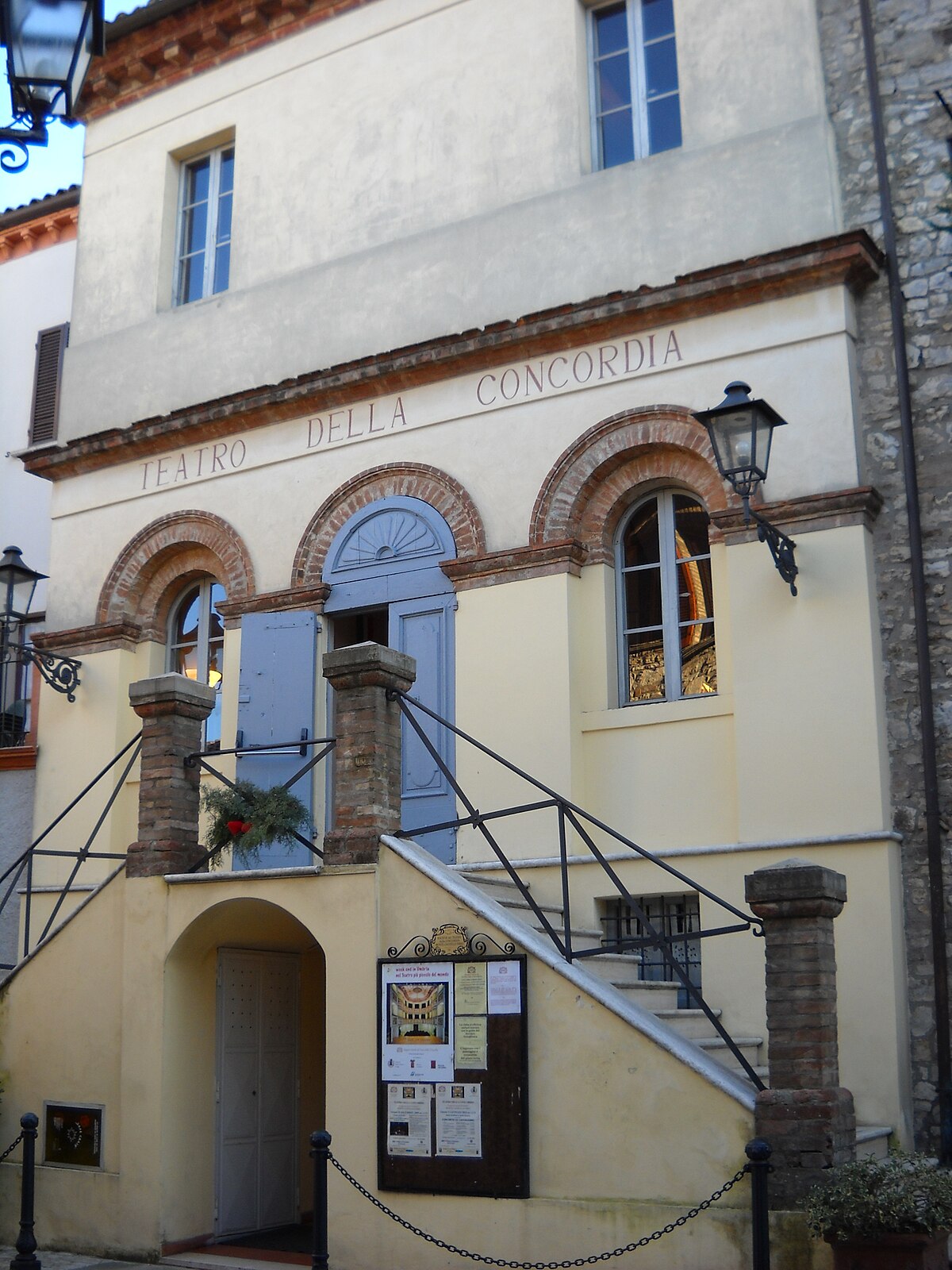

Teatro della Concordia
Overview
The Teatro della Concordia is celebrated as one of the smallest theatres in Italy, nestled in the picturesque town of Monte Castello di Vibio in the Lazio region. Built in the early 19th century, this theatre is a remarkable example of neoclassical architecture and serves as an important cultural hub for the local community. With its seating capacity of just 99, it creates a unique atmosphere that fosters close interaction between performers and audiences, making each performance a personal experience. The theatre’s rich history and continued use for various performances and events highlight its enduring significance within both the town and the broader context of Italian cultural heritage.
Visitors to Teatro della Concordia can expect to be captivated not only by the performances but also by the theatre’s aesthetic appeal and historical context. The theatre has managed to retain its original charm, providing a glimpse into the artistic life of the 19th century. It stands as a testament to the dedication of local residents who have preserved this cultural landmark for future generations, ensuring that it continues to serve as a vibrant venue for the performing arts.
History and Significance
The history of Teatro della Concordia dates back to the early 1800s when it was constructed to meet the cultural needs of the local community. The theatre was designed to host a variety of performances, from operas and plays to concerts, thereby enriching the cultural landscape of Monte Castello di Vibio. Over the years, it has played a crucial role in fostering local talent and providing a platform for artistic expression.
Throughout its existence, the theatre has undergone various phases of restoration and preservation, reflecting the commitment of the community to maintain this cultural treasure. The theatre’s intimate setting has allowed for a unique relationship between the performers and the audience, creating memorable experiences that resonate deeply with attendees. This has made Teatro della Concordia an essential part of the town’s identity and a focal point for cultural engagement.
In addition to its role in the local arts scene, the theatre has been a gathering place for community events, further solidifying its significance in the social fabric of Monte Castello di Vibio. The legacy of Teatro della Concordia continues to thrive as it hosts various performances and events, drawing visitors from near and far who are eager to experience the charm of this historic venue.
Architecture and Features
Teatro della Concordia is an exquisite example of neoclassical architecture, characterized by its elegant lines and harmonious proportions. The theatre is relatively small, with a seating capacity of merely 99, which contributes to its intimate atmosphere. The interior features a traditional horseshoe-shaped layout, allowing for excellent acoustics and visibility from every seat.
The stage is framed by a beautiful proscenium arch, adorned with intricate details that reflect the craftsmanship of the period. The theatre’s decor includes charming frescoes and ornamental moldings that enhance its aesthetic appeal. The use of rich colors and textures throughout the space creates a warm and inviting environment for both performers and audiences alike.
One of the notable features of the Teatro della Concordia is its unique wooden ceiling, which adds to the theatre’s acoustic properties. The careful design and construction of this space demonstrate the importance of theatrical performance during the time of its creation. Visitors can appreciate the meticulous attention to detail that has been preserved over the years, making it a significant architectural landmark in the region.
Overall, the Teatro della Concordia is not only a functioning theatre but also a work of art in its own right, capturing the essence of Italian theatrical tradition and architectural beauty.
Visiting Information
Reaching Teatro della Concordia is quite straightforward, as it is located in the heart of Monte Castello di Vibio. The town can be accessed by car, and there are parking facilities nearby. For those traveling by public transportation, it is advisable to check local bus schedules for routes that connect to the town.
Before planning your visit, it’s recommended to check the official website for current information regarding opening hours and ticket prices, as these can vary depending on the season and scheduled performances. When attending a show, expect an experience that is both personal and engaging, as the intimate setting of the theatre allows for close interaction with the performers.
Most performances last around two hours, including intermissions, making it a manageable outing for both locals and tourists. The best times to visit would be during the performance season, which typically runs throughout the year, with a variety of shows catering to different tastes.
Nearby Attractions
There are several attractions in and around Monte Castello di Vibio that visitors can explore:
- Castello di Vibio: A short distance from the theatre, this historic castle offers stunning views and insights into the region’s medieval history.
- Sanctuary of Santa Maria della Stella: This serene sanctuary is known for its beautiful architecture and peaceful surroundings, making it a perfect spot for reflection.
- Todi: Just a short drive away, Todi is a charming hilltop town with its own rich history, picturesque streets, and breathtaking views of the Umbrian landscape.
- Bolsena Lake: A bit further afield, this beautiful lake is ideal for outdoor activities such as swimming and hiking, offering a chance to relax in nature.
- Orvieto: Known for its stunning cathedral and underground tunnels, Orvieto is a must-visit for those interested in history and architecture.
Insider Tips
For the best photography opportunities, consider arriving early to capture the exterior of the theatre before the crowds arrive. Inside, be respectful of the performance and avoid using flash during shows. To avoid larger crowds, consider attending a weekday performance or one of the less popular shows.
Practical Information
When visiting Teatro della Concordia, it’s advisable to bring a light jacket or sweater, as the temperatures inside can vary depending on the season. Comfortable shoes are recommended for exploring the surrounding town and its attractions.
Seasonal events may also influence what to bring; during the summer months, consider sunscreen and a hat for outdoor activities, while winter visitors may want to prepare for cooler weather.
Frequently Asked Questions
How long should I spend visiting?
Most visitors spend around 2-3 hours, including time for the performance and a brief exploration of the theatre.
Is photography allowed?
Photography is generally allowed outside the theatre, but it is best to refrain from taking pictures during performances to respect the artists and audience.
Are there guided tours?
Check the official website for information on guided tours, as they may be offered during special events or peak seasons.
What’s the best time to visit?
The best time to visit Teatro della Concordia is during the performance season, which varies throughout the year.
Is it wheelchair accessible?
Check the official website for information on accessibility options, as facilities may vary.
Can I buy tickets online?
Yes, tickets can be purchased online through the official website, allowing you to secure your spot in advance.
Are there restrooms and cafes?
Restroom facilities are available onsite, but it’s advisable to check for nearby cafes or restaurants for dining options before or after the performance.
What should I wear?
Smart casual attire is recommended for performances, as it aligns with the cultural significance of the theatre and enhances the overall experience.
Photo Gallery
Visit Information
Quick Facts
- Heritage Type
- Theatre Building
- Region
- lazio
- Wikidata ID
- Q1628925
More in lazio
Abatino Park
📍 lazio, Italy
The Abatino Park is a serene natural park located in Lazio, Italy, offering visitors a peaceful retreat with lush landscapes and recreational …
Abbazia di Santa Maria di Ponza
📍 lazio, Italy
The Abbazia di Santa Maria di Ponza is a Cistercian monastery on Ponza Island, Italy, renowned for its serene atmosphere and historical significance.

Academia Belgica
📍 lazio, Italy
The Academia Belgica is a Belgian cultural institution located in Rome, Italy, notable for its role in promoting Belgian heritage and fostering …
Accademia di Belle Arti di Frosinone
📍 lazio, Italy
The Accademia di Belle Arti di Frosinone is an educational institution in Frosinone, Italy, renowned for its commitment to fostering artistic talent …
Acqua Vergine
📍 lazio, Italy
Acqua Vergine is a modern aqueduct located in Rome, Italy, known for its engineering marvel and role in the city's water supply system.

Acquedotto delle Arcatelle
📍 lazio, Italy
The Acquedotto delle Arcatelle is a 17th-century aqueduct located in Tarquinia, Italy, recognized for its impressive architectural design and …
More Theatre Building

Ancient theatre of Taormina
📍 sicily, Italy
The Ancient Theatre of Taormina is an ancient Greek theatre located in Sicily, Italy, renowned for its impressive architecture and stunning views of …
Anfiteatro Correa
📍 lazio, Italy
The Anfiteatro Correa is a former theatre building in Rome, Italy, known for its historical significance and architectural legacy from 1780 to 1936.
Arena Cinecittà Teatro San Quirico
📍 tuscany, Italy
The Arena Cinecittà Teatro San Quirico is a historic theatre building in Florence, Italy, renowned for its cultural performances and artistic …

Arena del Sole
📍 tuscany, Italy
The Arena del Sole is a historic theatre building located in Bologna, Italy, renowned for its architectural elegance and vibrant cultural …

Arena dello Stretto
📍 sicily, Italy
The Arena dello Stretto is a historic theatre building located in Reggio Calabria, Italy, renowned for its architectural elegance and cultural …
Auditorium al Duomo
📍 tuscany, Italy
The Auditorium al Duomo is a prominent theatre building located in Florence, Italy, known for its architectural elegance and cultural significance in …