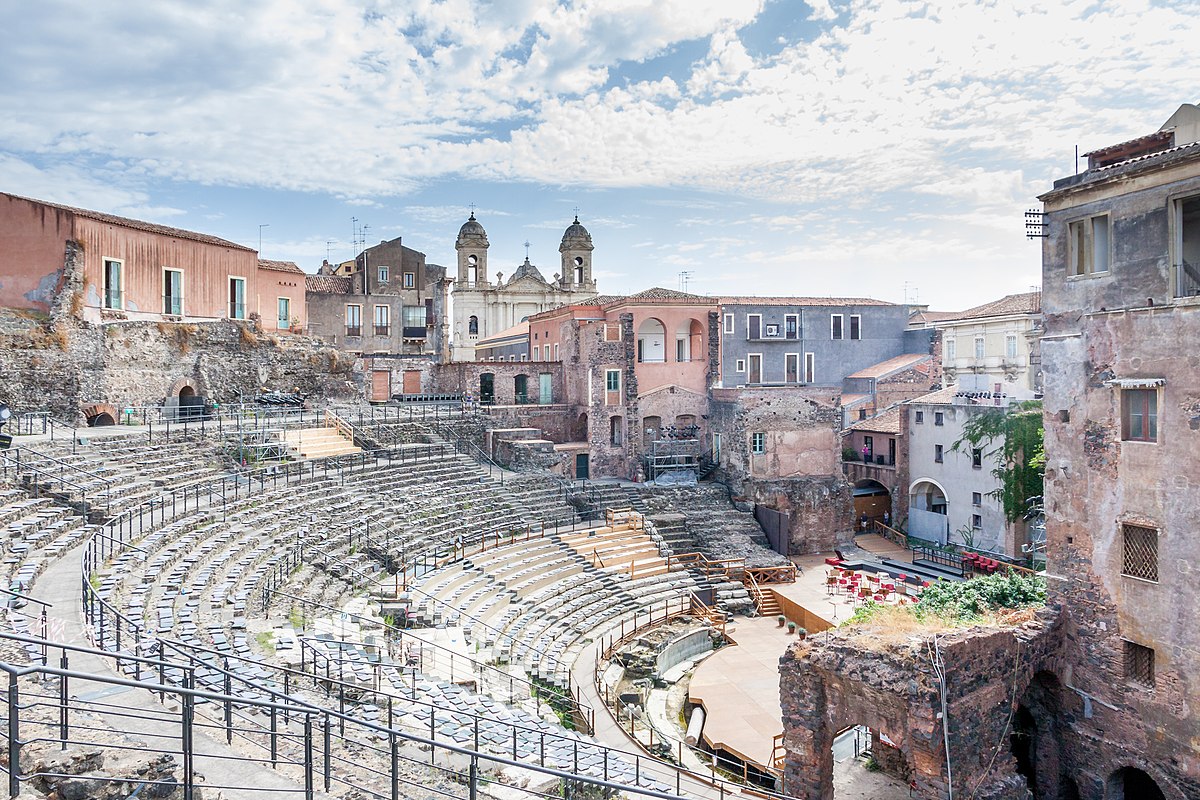


Roman Theatre of Catania
Overview
The Roman Theatre of Catania is a remarkable archaeological site located in the bustling city of Catania, Sicily. This ancient theatre, constructed during the Roman Empire, serves as a vital link to the region’s rich history and cultural evolution. With origins that date back to the 2nd century AD, the theatre was built into the slopes of a hill, showcasing the ingenuity of Roman engineering and architecture. As one of the most significant remnants of Roman influence in Sicily, it provides insight into the social and entertainment practices of ancient civilizations.
The theatre’s strategic location in Catania, a city that has faced various natural and cultural transformations over the centuries, adds to its significance. Today, visitors can explore its ruins and imagine the lively performances that once took place within its stone walls. This site not only reflects the architectural prowess of its builders but also serves as a testament to the enduring legacy of Roman culture in Sicily.
History and Significance
The Roman Theatre of Catania stands as an important symbol of the city’s historical narrative. Although specific dates of construction are elusive, it is generally accepted that the theatre was built in the 2nd century AD during the peak of Roman influence in the region. The site was likely used for a variety of performances, including plays, musical events, and possibly gladiatorial contests.
Over the centuries, Catania has experienced multiple volcanic eruptions, particularly from Mount Etna, which has significantly impacted the city and its structures. The theatre, however, has remarkably survived these natural disasters, showcasing the resilience of Roman engineering. Following the decline of the Roman Empire, the theatre fell into disuse, and much of its stonework was repurposed for other buildings in the city, contributing to its gradual decline.
Today, the theatre is not only an archaeological site but also a cultural landmark that highlights the historical significance of Catania during the Roman era. It has been the subject of numerous archaeological studies and restoration efforts, aiming to preserve its ruins for future generations. The theatre serves as a focal point for understanding the social, political, and artistic life of ancient Sicilian society.
Architecture and Features
The Roman Theatre of Catania is remarkable for its architectural design and construction techniques. It features a semi-circular layout typical of Roman theatres, which allowed for optimal acoustics and sightlines for the audience. The theatre originally could accommodate thousands of spectators, although the exact number is unclear due to the loss of some structural elements over time.
The seating area, known as the cavea, is divided into several tiers, with the lower tiers intended for the elite and the upper tiers for the general populace. The seating is carved directly into the volcanic rock, demonstrating the Romans’ ability to work with the natural landscape. The orchestra, where the performers would have entertained the audience, is a key feature of the theatre and is surrounded by the remains of columns and other architectural elements that hint at its former grandeur.
In addition to the main auditorium, the theatre is complemented by a series of corridors and entrances that facilitated access for both the audience and performers. The remains of a backdrop stage, or scaena, can also be observed, providing insight into the staging practices of the time. The integration of the theatre into the hillside not only reflects the ingenuity of Roman construction but also offers a unique perspective on how the natural environment influenced architectural design.
Visiting Information
Visiting the Roman Theatre of Catania is an enriching experience for those interested in history and archaeology. The site is located conveniently within the city, making it accessible for both local and international tourists. Various forms of public transportation, including buses and taxis, can take visitors close to the site.
Check the official website for current information regarding opening hours and ticket prices. It is advisable to allocate at least an hour to explore the theatre thoroughly, allowing time to appreciate the intricate details of the architecture and to absorb the historical context. For a more in-depth experience, consider joining a guided tour, which often provides valuable insights and stories about the site.
The best time to visit is during the spring and fall when the weather is mild, and crowds are less overwhelming. Summer months can see an influx of tourists, making for a busier experience. Early mornings or late afternoons are ideal for those seeking a quieter visit.
Nearby Attractions
While exploring Catania, there are several other attractions worth visiting:
- Piazza del Duomo: The main square of Catania, home to the stunning Catania Cathedral and the iconic Elephant Fountain.
- Castello Ursino: A medieval castle that offers insight into the history of Catania and stunning views of the city.
- Mercato del Pesce: A vibrant fish market that showcases local seafood and is a great spot to experience the daily life of the city.
- Monastero dei Benedettini: A UNESCO World Heritage Site, this Benedictine monastery is an architectural marvel with beautiful gardens.
- Via Etnea: The main street of Catania, lined with shops, cafes, and stunning Baroque architecture.
Insider Tips
To capture the best photographs of the Roman Theatre, visit early in the morning or later in the afternoon when the sunlight casts a warm glow on the ancient stones. Look for angles that highlight the semi-circular seating arrangement and the surrounding architecture.
To avoid crowds, try to visit on weekdays instead of weekends, as local tourists often flock to the site during the latter. If you’re planning to explore multiple attractions, consider purchasing a combined ticket that may offer discounts for entry to several sites.
Practical Information
When visiting the Roman Theatre of Catania, it is advisable to wear comfortable footwear, as the terrain may be uneven. Bring a bottle of water, especially during the warmer months, to stay hydrated while exploring.
Seasonal considerations include the potential for rain in the winter, so check the weather forecast prior to your visit. Additionally, be prepared for varying temperatures, especially if visiting during the summer when Catania can be quite hot.
Frequently Asked Questions
How long should I spend visiting?
It is recommended to spend about one hour at the Roman Theatre to fully enjoy the site and its historical context.
Is photography allowed?
Yes, photography is generally allowed, but be mindful of any specific restrictions that may be in place.
Are there guided tours?
Yes, guided tours are available and can provide deeper insights into the history and architecture of the theatre.
What’s the best time to visit?
The best times to visit are during the spring and fall when the weather is pleasant and crowds are smaller.
Is it wheelchair accessible?
Accessibility may vary, so it’s best to check the official website for specific information regarding wheelchair access.
Can I buy tickets online?
Check the official website for current information on ticket purchasing options, including online availability.
Are there restrooms and cafes?
Facilities may be limited at the site itself, so it is advisable to use restrooms and seek refreshments in nearby areas.
What should I wear?
Wear comfortable clothing and shoes suitable for walking, and consider bringing a hat or sunglasses for sun protection during the warmer months.
Photo Gallery
Visit Information
Quick Facts
- Heritage Type
- Archaeological Site
- Region
- sicily
- Wikidata ID
- Q600690
More in sicily

Abbazia di S. Benedetto
📍 sicily, Italy
The Abbazia di S. Benedetto is a historic monastery located in Militello in Val di Catania, Sicily, renowned for its architectural beauty and serene …

Abbazia di Santa Maria
📍 sicily, Italy
Abbazia di Santa Maria is a historic church building located in Novara di Sicilia, Sicily, Italy, known for its architectural beauty and cultural …

Acquedotto Biscari
📍 sicily, Italy
The Acquedotto Biscari is a historic aqueduct located in Sicily, Italy, renowned for its impressive engineering and cultural significance in the …

Agrigento
📍 sicily, Italy
Agrigento is a historic city in Sicily, Italy, renowned for its ancient ruins and the Valley of the Temples, a UNESCO World Heritage Site showcasing …

Agrigento Cathedral
📍 sicily, Italy
Agrigento Cathedral is a historic church in Agrigento, Sicily, celebrated for its architectural beauty and cultural significance in the region.

Alcantara
📍 sicily, Italy
Alcantara is a river in Sicily, Italy, known for its ancient name Akesines and striking natural beauty, attracting nature enthusiasts and history …
More Archaeological Site

Abbazia di Santa Maria di Corazzo
📍 calabria, Italy
The Abbazia di Santa Maria di Corazzo is an archaeological site located in Carlopoli, Calabria, Italy, renowned for its historical significance and …

Abella
📍 campania, Italy
The archaeological site of Abella in Campania, Italy, is an ancient human settlement known for its historical significance and cultural heritage.

Abellinum
📍 campania, Italy
Abellinum is an archaeological site in Atripalda, Italy, known for its ancient ruins that reveal insights into Roman settlement and urban planning.

Aeculanum
📍 campania, Italy
Aeculanum is an archaeological site in Campania, Italy, known for its remnants of an ancient town that offer insight into early Roman urban life.
Aesernia
📍 molise, Italy
Aesernia is an ancient Roman archaeological site located in Molise, Italy, renowned for its well-preserved ruins that reflect the grandeur of Roman …

Alba Fucens
📍 lazio, Italy
Alba Fucens is an ancient archaeological site in Lazio, Italy, known for its well-preserved ruins that reflect the grandeur of a once-thriving Roman …