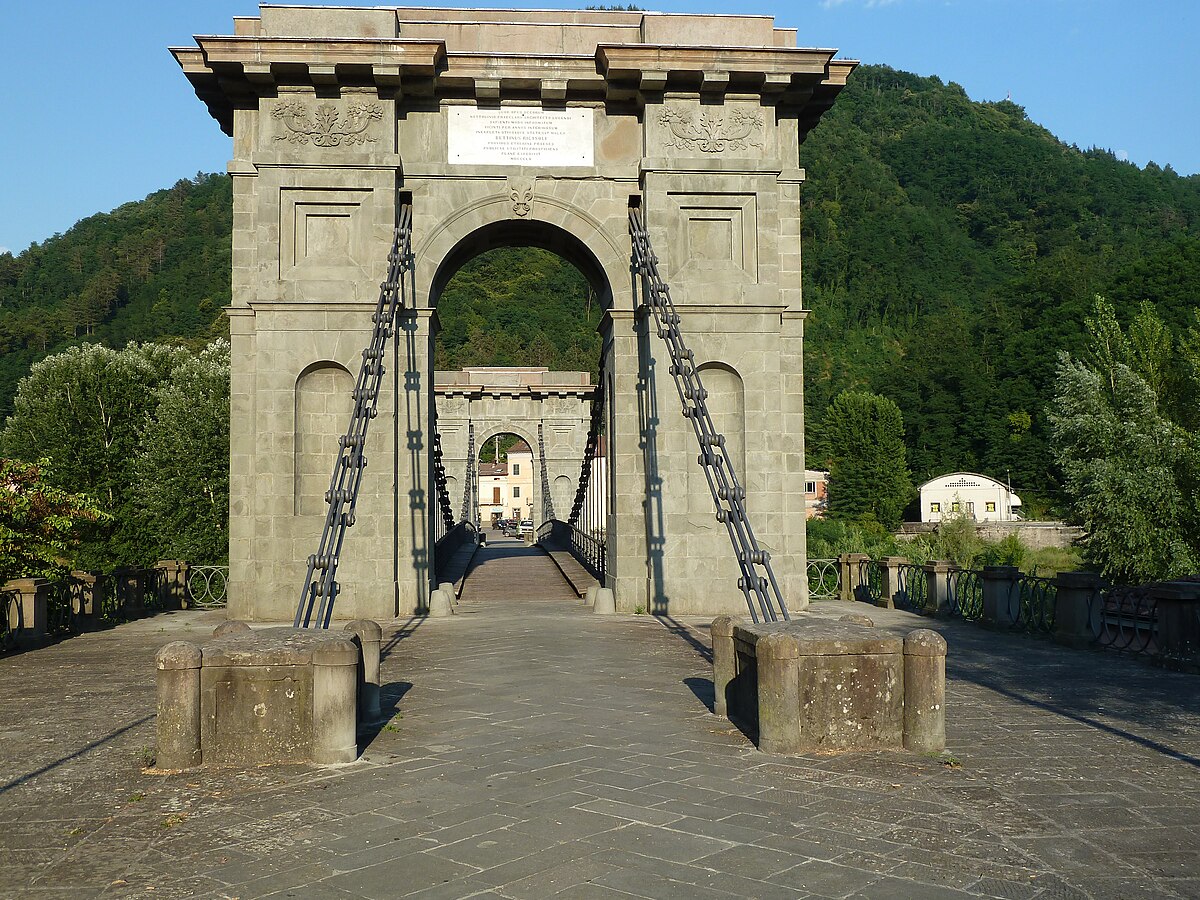


Ponte delle Catene
Overview
The Ponte delle Catene, or “Bridge of Chains,” is an iconic structure in the picturesque town of Bagni di Lucca in Tuscany, Italy. This bridge stands as a charming and functional connection across the Lima River, capturing the essence of both historical engineering and scenic beauty. Its unique design and surrounding landscape make it a notable landmark that attracts both locals and travelers alike.
Bagni di Lucca, situated along the Serchio Valley, is enveloped in lush hills and verdant forests, offering a serene backdrop that enhances the bridge’s allure. Visitors to Ponte delle Catene can expect to experience not only a beautiful piece of architecture but also a glimpse into the region’s rich past, which has been shaped significantly by its rivers and mountains. The bridge serves as a reminder of the importance of transportation and connectivity in this charming Tuscan community.
As you approach Ponte delle Catene, the gentle sounds of the river below and the breathtaking views of the surrounding hills set the stage for a visit that combines history, culture, and natural beauty.
History and Significance
The history of the Ponte delle Catene reflects the broader narrative of Bagni di Lucca, a town that has long been recognized for its thermal springs and as a favored retreat for European nobility in the 18th and 19th centuries. Although specific dates regarding the bridge’s construction are not documented, it is generally understood that the bridge was built to facilitate access across the Lima River, an essential route for both locals and visitors.
The bridge’s name, which translates to “Bridge of Chains,” is derived from its distinctive architectural feature. Chains were historically used in the construction to support the structure, showcasing an innovative approach to bridge design in its time. This design not only provided stability but also added an aesthetic appeal that has endured over the years.
Throughout its existence, the Ponte delle Catene has served as more than just a passageway; it has become a symbol of the town’s connection to its natural environment. The bridge plays a vital role in the local culture, often serving as a backdrop for community gatherings and events. Its significance is further highlighted by the fact that it is one of the few remaining structures of its kind in the region, making it a valuable piece of Tuscan heritage.
Architecture and Features
The architecture of the Ponte delle Catene is characterized by its robust yet elegant design, which stands out against the backdrop of the lush Tuscan landscape. The bridge is primarily constructed from stone, showcasing traditional building techniques that have been employed in the region for centuries. Its most distinctive feature is the use of chains, which were integral to its construction and help support the weight of the structure.
The bridge spans the Lima River, offering a graceful arch that allows for the passage of water beneath while creating a striking visual element. The combination of the natural stone and the intricate chain design creates a harmonious blend of functionality and beauty. As visitors walk across the bridge, they can appreciate the craftsmanship that went into its creation, with attention to detail evident in the stonework and overall structure.
Surrounding the bridge, the scenic environment enhances its beauty. The lush greenery and the gentle flow of the river create a tranquil atmosphere, making it a popular spot for photography and leisurely strolls. Whether viewed from a distance or up close, the Ponte delle Catene is a stunning example of traditional bridge architecture, representing both the ingenuity of its builders and the natural beauty of Tuscany.
Visiting Information
Visiting the Ponte delle Catene offers a unique opportunity to immerse oneself in the charm of Bagni di Lucca. The bridge is accessible by foot, making it a convenient stop for those exploring the town. The best way to reach Bagni di Lucca is by car or public transport from larger cities in Tuscany, such as Lucca and Florence.
Upon arrival, visitors can expect a peaceful atmosphere that encourages leisurely exploration. While there are no formal entry fees, it is advisable to check the official website for current information regarding any potential guided tours or special events that might be taking place.
To truly appreciate the bridge and its surroundings, it is recommended to allocate at least an hour for your visit. This will allow time to walk across the bridge, take photographs, and enjoy the serene environment. The best times to visit are during the early morning or late afternoon when the light casts a warm glow over the landscape, enhancing the beauty of the bridge.
Nearby Attractions
While Ponte delle Catene is a highlight in itself, the surrounding area of Bagni di Lucca offers additional attractions worth exploring:
Thermal Baths: Bagni di Lucca is famous for its thermal springs, with several spas offering relaxing treatments that harness the natural mineral waters.
Villa Fiori: This historic villa is known for its beautiful gardens and architecture, providing a glimpse into the grandeur of 19th-century design.
San Cassiano Church: A short walk from the bridge, this church features stunning frescoes and a peaceful atmosphere, ideal for quiet reflection.
Hiking Trails: The hills surrounding Bagni di Lucca are crisscrossed with hiking trails that offer stunning views of the valley and the chance to explore the natural beauty of the region.
Lucca: Just a short drive away, the city of Lucca is famous for its well-preserved Renaissance walls, charming streets, and historical landmarks.
Insider Tips
For those planning to visit the Ponte delle Catene, here are some insider tips to enhance your experience:
Photography: The bridge provides fantastic photo opportunities, especially during sunrise and sunset. Consider bringing a tripod for long-exposure shots of the river below.
Crowd Avoidance: To enjoy a quieter experience, visit on weekdays or during off-peak hours. Early mornings are often less busy.
Local Cuisine: After your visit, consider stopping at a nearby trattoria to sample local Tuscan dishes, such as tortelli lucchese, a specialty of the region.
Practical Information
When planning your visit to the Ponte delle Catene, consider the following practical information:
What to Bring: Comfortable walking shoes are recommended, as the area around the bridge can involve some walking. A camera is also essential for capturing the beauty of the bridge and its surroundings.
Seasonal Considerations: The best times to visit are during spring and fall when the weather is mild and the landscape is vibrant. Summer can be hot and crowded, while winter may bring cooler temperatures.
Amenities: There are limited amenities directly at the bridge, so plan accordingly. Local cafes and restaurants in Bagni di Lucca offer refreshments and dining options.
Frequently Asked Questions
How long should I spend visiting?
Allocate at least an hour to fully appreciate the bridge and its surroundings, though you may want to spend more time exploring the town.
Is photography allowed?
Yes, photography is encouraged, especially given the picturesque setting of the bridge.
Are there guided tours?
Check the official website for current information on guided tours that may be available during your visit.
What’s the best time to visit?
Early morning or late afternoon offers the best lighting for photography and fewer crowds.
Is it wheelchair accessible?
The bridge is primarily for foot traffic, and accessibility may vary; check local resources for detailed information.
Can I buy tickets online?
There are generally no entry fees for the bridge, but check the official website for any special events or guided tours that may require tickets.
Are there restrooms and cafes?
Limited amenities are available directly at the bridge, but nearby cafes and restaurants in Bagni di Lucca provide options for refreshments.
What should I wear?
Dress comfortably and in layers, especially during the cooler months, as temperatures can vary throughout the day.
Photo Gallery
More in tuscany

Abbazia di San Gaudenzio
📍 tuscany, Italy
The Abbazia di San Gaudenzio is a historic abbey located in San Gaudenzio, Tuscany, Italy, notable for its architectural elegance and spiritual …

Abbey of St Maria del Monte
📍 tuscany, Italy
The Abbey of St Maria del Monte is a historic church building located in Cesena, Italy, celebrated for its architectural beauty and serene ambiance.
Abiogen Pharma
📍 tuscany, Italy
Abiogen Pharma is an educational institution located in Pisa, Italy, recognized for its contributions to pharmaceutical education and research.

Academia de la Crusca library
📍 tuscany, Italy
The Academia de la Crusca library is a historic library located in Tuscany, Italy, renowned for its dedication to the Italian language and its …

Acquedotto leopoldino
📍 tuscany, Italy
The Acquedotto Leopoldino is an impressive aqueduct system located in Livorno, Tuscany, Italy, recognized for its historical significance and …

Acquedotto Lorenese
📍 tuscany, Italy
The Acquedotto Lorenese is a historic aqueduct located in Campiglia Marittima, Tuscany, Italy, known for its 19th-century architecture and engineering …
More Bridge

Adda viaduct
📍 lombardy, Italy
The Adda Viaduct is a remarkable highway bridge located in Lombardy, Italy, distinguished by its impressive engineering and integral role in regional …
Addetta Bridge
📍 lombardy, Italy
The Addetta Bridge is a historic bridge located in Mediglia, Italy, known for its architectural significance and serene surroundings.

Adriatico bridge
📍 apulia, Italy
The Adriatico Bridge is a remarkable bridge located in Bari, Italy, known for its striking design and significance in connecting the city to its …
Alessandro Manzoni Viaduct
📍 lombardy, Italy
The Alessandro Manzoni Viaduct is a remarkable road bridge located in Lombardy, Italy, spanning the Adda River on the SS36, and noted for its …

Ancient Roman bridge
📍 tuscany, Italy
The Ancient Roman Bridge in Tuscany, Italy, is a remarkable structure known for its impressive engineering and historical significance.
Angitola Viaduct
📍 calabria, Italy
The Angitola Viaduct is a railway bridge located in Calabria, Italy, known for its impressive engineering and scenic views of the surrounding …