


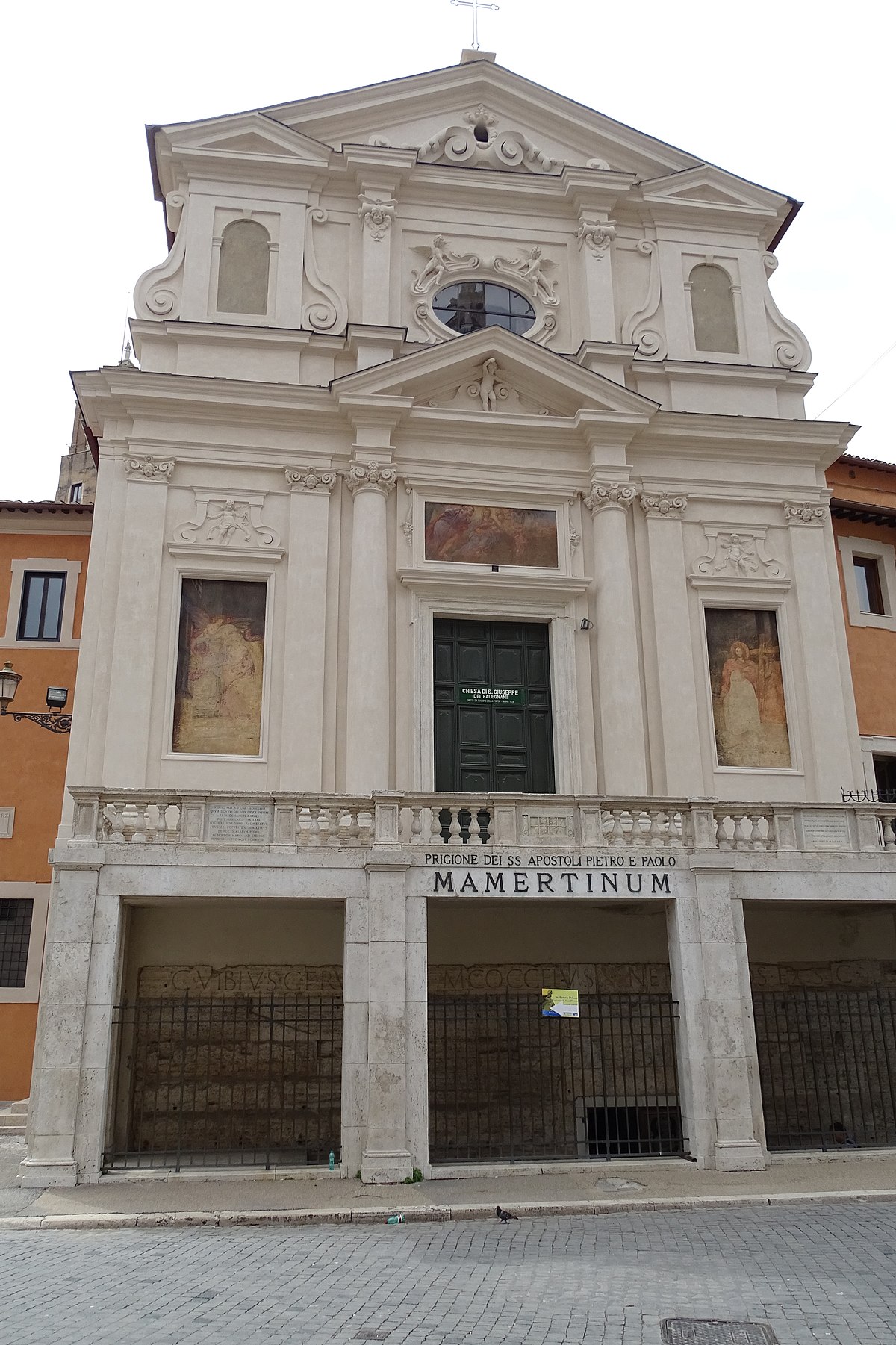


Mamertine Prison
Overview
Located in the heart of Rome, the Mamertine Prison is an archaeological site that captivates visitors with its intriguing history and connection to some of the most notable figures of ancient Rome. Often referred to as the prison of the Romans, this site is believed to date back to around the 7th century BCE, making it one of the oldest prisons in the world. The prison’s historical significance is underscored by its association with key events and personalities, such as the imprisonment of saints Peter and Paul, as well as other prominent enemies of the state.
The Mamertine Prison’s location adds to its allure, situated near the Roman Forum and the Capitoline Hill, central areas that were once the heart of Roman public life. As you explore this site, you will encounter the remnants of its dark past, reflecting the harsh realities of incarceration in ancient times. The prison stands as a poignant reminder of the power dynamics within the Roman Empire and the fates of those who dared to challenge it. Visitors to the Mamertine Prison can expect a thought-provoking experience that blends archaeology with rich historical narratives.
History and Significance
The Mamertine Prison’s history is deeply intertwined with the evolution of Rome itself. While the exact date of its construction remains uncertain, it is widely accepted that the site served as a prison from at least the 7th century BCE. Initially, it is believed that the prison was used to hold high-profile prisoners, particularly those accused of treason or serious crimes against the state. Among these prisoners were notable figures like the apostles Peter and Paul, whose imprisonment here has become a significant aspect of Christian tradition.
The prison’s name, “Mamertine,” is thought to be derived from the Latin word “Mamers,” which refers to a deity associated with war and violence. This connection underscores the prison’s role as a site of punishment and despair. Throughout its history, the Mamertine Prison has witnessed the rise and fall of empires, the shifting tides of political power, and the struggles of individuals caught in the web of history.
In times of peace, the prison was often used for political prisoners, while in times of war, it served as a holding cell for captured enemies. The prison’s conditions were harsh, with many inmates enduring brutal treatment. The site not only serves as a reminder of the punitive measures of the Roman legal system but also highlights the complexities of justice and power in ancient Rome.
As Rome transitioned from a republic to an empire, the Mamertine Prison remained a symbol of the state’s authority, reflecting the societal attitudes towards crime and punishment. Its enduring legacy is not merely as a place of confinement but as an integral part of Roman history, offering insights into the cultural and political landscape of the time.
Architecture and Features
The Mamertine Prison presents an intriguing architectural layout that reflects its ancient origins. The structure consists of two main chambers: the upper chamber, known as the “Tullianum,” and the lower chamber, which is believed to have been used for holding prisoners before their execution. The Tullianum is a circular room characterized by its rough stone walls, which evoke the somber atmosphere of confinement. Visitors will notice the remnants of a large stone basin, which is thought to have been used for water or possibly even as a place for the condemned to wash before their execution.
The lower chamber, accessible via a narrow staircase, is even more austere. It is a dark, dank space that highlights the grim realities faced by its inhabitants. The walls are adorned with inscriptions and markings left by prisoners, adding a haunting personal touch to the site. The architecture of the Mamertine Prison is a striking contrast to the grandeur of other Roman structures, emphasizing its purpose as a place of punishment rather than celebration.
As you explore the prison, you will find various artifacts and remnants that provide context to its history. The structure has undergone several renovations and restorations over the centuries, yet much of its original design remains intact, offering a glimpse into the engineering and architectural techniques employed by the Romans. The prison’s layout and features are not just remnants of a bygone era but serve as powerful reminders of the lives that were forever altered within its walls.
Visiting Information
Visiting the Mamertine Prison is a journey into the depths of Roman history. It is conveniently located in the center of Rome, making it accessible to tourists exploring the city’s rich heritage. To get there, visitors can utilize the extensive public transport system, including buses and the metro, which offers various routes to the nearby areas.
Check the official website for current information regarding hours and ticket prices, as these can vary throughout the year. It is advisable to allocate sufficient time for your visit, typically around one hour, to fully appreciate the site and its historical significance.
The best times to visit the Mamertine Prison are during the shoulder seasons of spring and fall when the weather is pleasant and the crowds are relatively smaller. Early morning visits can help you avoid peak tourist times, allowing for a more intimate experience within the prison’s somber chambers.
Inside, you can expect a guided experience that provides insights into the prison’s storied past. The audio guides are particularly helpful, offering detailed information as you navigate through the site. As the prison is an archaeological site, visitors should prepare for uneven surfaces and low lighting, particularly in the lower chamber.
Nearby Attractions
The Mamertine Prison’s prime location allows visitors to easily explore several nearby attractions that encapsulate the essence of Rome’s rich history. Here are a few notable sites to consider:
Roman Forum: Just a short walk away, the Roman Forum was once the center of political and social life in ancient Rome. Today, it stands as a magnificent archaeological site filled with ruins of temples, basilicas, and public spaces.
Palatine Hill: Adjacent to the Roman Forum, Palatine Hill offers a wealth of ancient ruins and stunning views over the Forum and Circus Maximus. It is also considered the birthplace of Rome, where mythological legends say Romulus founded the city.
Colosseum: A short distance from the Mamertine Prison, the Colosseum is one of the most iconic symbols of Rome. This grand amphitheater once hosted gladiatorial contests and public spectacles, drawing crowds from across the empire.
Capitoline Hill: Home to the Capitoline Museums and stunning views of the Forum, this hill is rich in art and history. The museums house a vast collection of ancient sculptures and artifacts, providing further context to your visit.
Piazza Venezia: Located slightly north of the Mamertine Prison, this bustling piazza is dominated by the impressive Vittoriano monument, dedicated to Victor Emmanuel II, the first king of unified Italy.
Insider Tips
To enhance your visit to the Mamertine Prison, consider these insider tips:
Photography: While photography is allowed, be mindful of the low lighting conditions, especially in the lower chamber. Using a camera with a good low-light capability will help you capture the atmosphere effectively.
Crowd Avoidance: To enjoy a quieter experience, visit early in the morning or later in the afternoon. Weekdays tend to be less crowded than weekends.
Guided Tours: If you want to delve deeper into the prison’s history, consider joining a guided tour. Knowledgeable guides can provide invaluable insights and anecdotes that enrich your understanding of the site.
Practical Information
When visiting the Mamertine Prison, be prepared for an immersive experience. Here are some practical considerations:
What to Bring: Comfortable walking shoes are essential, as you will be navigating uneven surfaces. A light jacket may be advisable, especially in cooler months, as the prison can feel damp and chilly.
Seasonal Considerations: The prison can be busy during the summer months, so if you prefer a quieter experience, aim for the spring or fall. The weather during these seasons is generally mild, making it more pleasant for exploration.
Accessibility: The prison may present challenges for those with mobility issues due to its uneven surfaces and staircases, so plan your visit accordingly.
Frequently Asked Questions
How long should I spend visiting?
A visit typically lasts about one hour, allowing you to explore the chambers and absorb the historical context.
Is photography allowed?
Yes, photography is permitted, but be cautious of the low lighting conditions in certain areas.
Are there guided tours?
Yes, guided tours are available and can provide deeper insights into the prison’s history.
What’s the best time to visit?
Early mornings or late afternoons, especially during weekdays, are ideal for avoiding crowds.
Is it wheelchair accessible?
The Mamertine Prison may not be fully accessible due to staircases and uneven surfaces. Check ahead for accommodations.
Can I buy tickets online?
Check the official website for information regarding online ticket purchases and availability.
Are there restrooms and cafes?
Facilities may be limited in the immediate vicinity of the prison, so plan accordingly.
What should I wear?
Wear comfortable clothing and sturdy shoes, as you will be walking on uneven surfaces. Dress in layers for temperature fluctuations.
Photo Gallery
Visit Information
Quick Facts
- Heritage Type
- Archaeological Site
- Region
- lazio
- Wikidata ID
- Q1035634
More in lazio
Abatino Park
📍 lazio, Italy
The Abatino Park is a serene natural park located in Lazio, Italy, offering visitors a peaceful retreat with lush landscapes and recreational …
Abbazia di Santa Maria di Ponza
📍 lazio, Italy
The Abbazia di Santa Maria di Ponza is a Cistercian monastery on Ponza Island, Italy, renowned for its serene atmosphere and historical significance.

Academia Belgica
📍 lazio, Italy
The Academia Belgica is a Belgian cultural institution located in Rome, Italy, notable for its role in promoting Belgian heritage and fostering …
Accademia di Belle Arti di Frosinone
📍 lazio, Italy
The Accademia di Belle Arti di Frosinone is an educational institution in Frosinone, Italy, renowned for its commitment to fostering artistic talent …
Acqua Vergine
📍 lazio, Italy
Acqua Vergine is a modern aqueduct located in Rome, Italy, known for its engineering marvel and role in the city's water supply system.

Acquedotto delle Arcatelle
📍 lazio, Italy
The Acquedotto delle Arcatelle is a 17th-century aqueduct located in Tarquinia, Italy, recognized for its impressive architectural design and …
More Archaeological Site

Abbazia di Santa Maria di Corazzo
📍 calabria, Italy
The Abbazia di Santa Maria di Corazzo is an archaeological site located in Carlopoli, Calabria, Italy, renowned for its historical significance and …

Abella
📍 campania, Italy
The archaeological site of Abella in Campania, Italy, is an ancient human settlement known for its historical significance and cultural heritage.

Abellinum
📍 campania, Italy
Abellinum is an archaeological site in Atripalda, Italy, known for its ancient ruins that reveal insights into Roman settlement and urban planning.

Aeculanum
📍 campania, Italy
Aeculanum is an archaeological site in Campania, Italy, known for its remnants of an ancient town that offer insight into early Roman urban life.
Aesernia
📍 molise, Italy
Aesernia is an ancient Roman archaeological site located in Molise, Italy, renowned for its well-preserved ruins that reflect the grandeur of Roman …

Alba Fucens
📍 lazio, Italy
Alba Fucens is an ancient archaeological site in Lazio, Italy, known for its well-preserved ruins that reflect the grandeur of a once-thriving Roman …