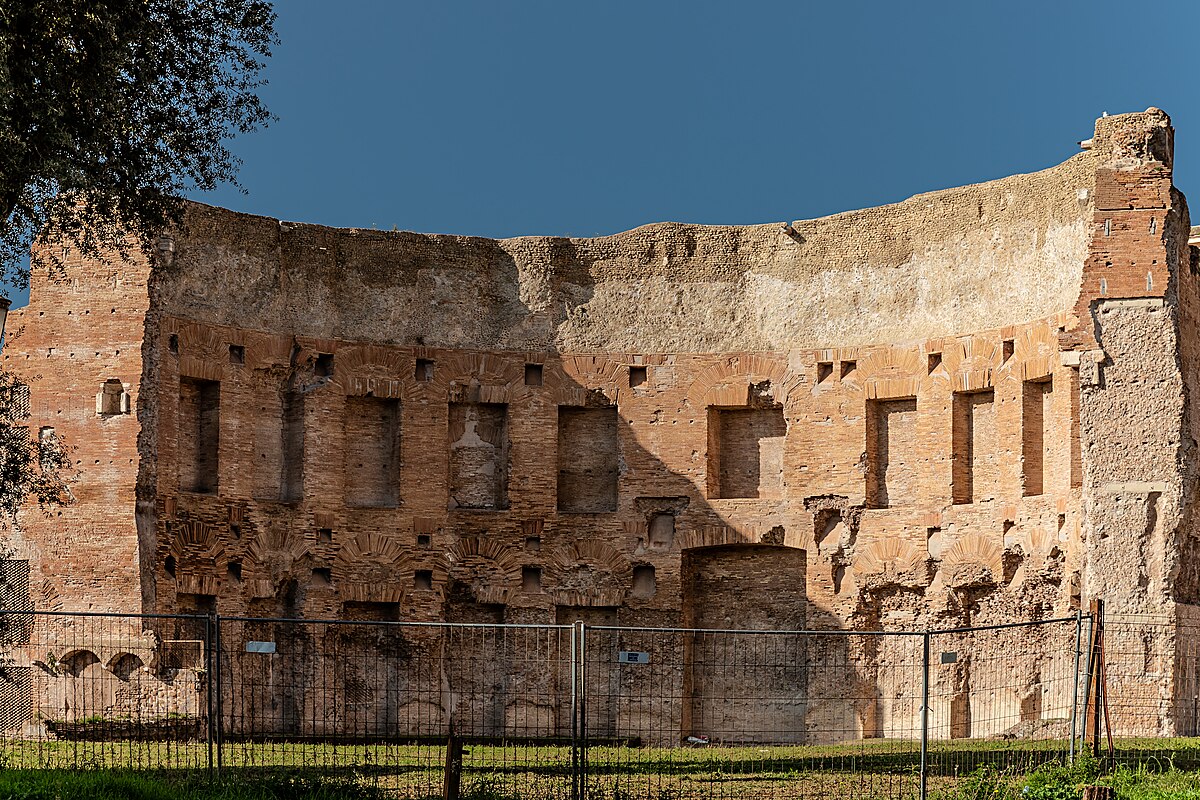


Baths of Trajan
Overview
The Baths of Trajan, situated in the heart of Rome, represent one of the grandest examples of ancient Roman public bath complexes. Constructed during the reign of Emperor Trajan, starting in 104 AD, this monumental structure was dedicated to public use in 109 AD, reflecting the Roman commitment to public health and leisure. The site not only served as a bathing facility but also as a social and cultural hub for the citizens of Rome, providing a space for relaxation, exercise, and social interaction.
Occupying a significant portion of the Quirinal Hill, the Baths of Trajan were part of a larger complex that included gardens and spaces for various recreational activities. The sheer scale of the baths is indicative of the architectural ingenuity of the Romans, showcasing their ability to create vast, multifunctional buildings that catered to the needs of a growing urban population. Today, the ruins of the Baths of Trajan continue to attract visitors, offering insights into the daily life and social customs of ancient Rome, making it an essential stop for anyone interested in Roman history and architecture.
History and Significance
The construction of the Baths of Trajan was a monumental endeavor that reflected the power and vision of Emperor Trajan, known for his military conquests and civic building projects. This bathing complex was part of Trajan’s broader efforts to enhance the urban landscape of Rome, providing not only a space for hygiene but also a venue for entertainment and social engagement. The baths were designed to accommodate a large number of bathers, with various rooms and facilities that included hot and cold baths, saunas, and exercise areas.
The baths were constructed using innovative engineering techniques, including the use of concrete and the implementation of complex heating systems known as hypocausts, which circulated hot air beneath the floors and through the walls. This technological advancement allowed for a comfortable bathing experience, setting a standard for future bathhouses in the Roman Empire.
The significance of the Baths of Trajan extends beyond their architectural brilliance; they served as a symbol of Roman civilization, embodying the values of community, health, and leisure. They also illustrate the social dynamics of ancient Rome, where public bathing was an integral part of daily life, transcending social classes and providing a venue for political discussions and business dealings.
In the centuries following their closure, the baths fell into disrepair and were gradually dismantled for their materials. However, their remains continue to inform modern understanding of Roman engineering and urban planning, making them a vital archaeological site for research and education. Today, the Baths of Trajan are recognized not only for their historical significance but also as a UNESCO World Heritage Site, contributing to the global narrative of cultural heritage.
Architecture and Features
The Baths of Trajan were an architectural marvel of their time, characterized by their impressive scale and intricate design. The complex covered an area of approximately 13 hectares and included various functional spaces that catered to the diverse needs of Roman citizens.
The layout of the baths was carefully planned to include a sequence of rooms that created a seamless bathing experience. Visitors would typically enter through a grand entrance hall, leading into a series of large, open spaces. The main bathing areas included the frigidarium (cold bath), tepidarium (warm bath), and caldarium (hot bath), each designed with high ceilings and large windows to allow natural light to flood the interiors.
The frigidarium was particularly noteworthy, featuring a vast pool surrounded by marble columns and elaborate mosaics. This room served as a social space where bathers could gather and relax. The tepidarium and caldarium were equipped with heated floors, demonstrating the advanced engineering techniques of the Romans. The hypocaust system, which provided the necessary warmth, was an innovation that allowed for a comfortable bathing environment, even during colder months.
Aside from the bathing facilities, the complex included gymnasiums and gardens, encouraging physical fitness and relaxation in a natural setting. The architectural features of the Baths of Trajan also highlight the artistic skills of Roman craftsmen, with exquisite marble decorations and frescoes that adorned the walls and ceilings, showcasing scenes from mythology and daily life.
The ruins of the baths today provide a glimpse into the grandeur of Roman architecture, with remnants of columns, vaulted ceilings, and intricate mosaics still visible. These features contribute to the overall understanding of Roman aesthetics and their emphasis on beauty and functionality in public spaces.
Visiting Information
Visiting the Baths of Trajan offers a unique opportunity to explore one of Rome’s ancient wonders. The site is accessible to the public, and visitors can expect to spend several hours exploring the extensive ruins and learning about their historical context.
To reach the Baths of Trajan, public transportation options such as buses and the metro are available, with the nearest stations located within walking distance. It is advisable to check the official website for current information on opening hours and ticket prices, as these may vary seasonally.
When planning a visit, it is recommended to allocate at least two to three hours to fully appreciate the site. Guided tours may also be available, providing deeper insights into the history and significance of the baths. The best times to visit are during the early morning or late afternoon to avoid crowds and enjoy a more intimate experience with the ruins.
Visitors should prepare for varying weather conditions, as the site is primarily outdoors. Comfortable footwear is recommended, as the terrain may be uneven in certain areas. Additionally, bringing water and sun protection is advisable during the warmer months.
Nearby Attractions
While visiting the Baths of Trajan, there are several nearby attractions that complement the historical experience:
Quirinal Palace: Located just a short walk away, this official residence of the President of Italy offers guided tours of its beautiful gardens and opulent rooms.
Santa Maria della Vittoria: This stunning Baroque church is known for its remarkable sculptures, including Gian Lorenzo Bernini’s famous “Ecstasy of Saint Teresa.”
Piazza Barberini: A vibrant square featuring the famous Triton Fountain and surrounded by cafes and shops, ideal for a leisurely break.
Palazzo Barberini: An art museum housed in a magnificent Baroque palace, showcasing a rich collection of Italian masterpieces.
Villa Borghese: A large public park that offers a peaceful retreat from the city, complete with gardens, lakes, and art galleries.
Insider Tips
To make the most of your visit to the Baths of Trajan, consider the following tips:
Photography: While photography is generally allowed, be mindful of other visitors and avoid using flash in the ruins to preserve the site.
Crowd Avoidance: Visiting during weekdays or outside of peak tourist seasons can enhance your experience by providing a quieter atmosphere for exploration.
Guided Tours: Joining a guided tour can offer valuable insights, as knowledgeable guides can share stories and historical context that enrich your understanding of the site.
Practical Information
When preparing for your visit to the Baths of Trajan, consider the following practical information:
What to Bring: Comfortable walking shoes, water, sunscreen, and a hat are recommended for a pleasant visit, especially during the summer months when temperatures can be high.
Seasonal Considerations: The site is open year-round, but spring and fall are typically the best seasons for visiting due to milder weather conditions.
Restroom Facilities: Check the official website for information regarding restroom availability on-site.
Dining Options: While there are no cafes within the complex, several dining options are located nearby in the surrounding area.
Frequently Asked Questions
How long should I spend visiting?
Visitors typically spend about two to three hours at the Baths of Trajan to fully explore the ruins and appreciate their historical significance.
Is photography allowed?
Yes, photography is generally allowed, but be considerate of other visitors and avoid using flash.
Are there guided tours?
Guided tours may be available, providing additional insights into the history and architecture of the baths.
What’s the best time to visit?
Early mornings or late afternoons on weekdays are ideal for a quieter experience, avoiding the larger tourist crowds.
Is it wheelchair accessible?
Check the official website for detailed accessibility information to ensure a comfortable visit.
Can I buy tickets online?
It’s advisable to check the official website for current ticketing options, including online purchases.
Are there restrooms and cafes?
Restroom facilities are typically available nearby. For cafes, explore the surrounding area for dining options.
What should I wear?
Comfortable, weather-appropriate clothing and sturdy shoes are recommended for exploring the archaeological site.
Photo Gallery
More in lazio
Abatino Park
📍 lazio, Italy
The Abatino Park is a serene natural park located in Lazio, Italy, offering visitors a peaceful retreat with lush landscapes and recreational …
Abbazia di Santa Maria di Ponza
📍 lazio, Italy
The Abbazia di Santa Maria di Ponza is a Cistercian monastery on Ponza Island, Italy, renowned for its serene atmosphere and historical significance.

Academia Belgica
📍 lazio, Italy
The Academia Belgica is a Belgian cultural institution located in Rome, Italy, notable for its role in promoting Belgian heritage and fostering …
Accademia di Belle Arti di Frosinone
📍 lazio, Italy
The Accademia di Belle Arti di Frosinone is an educational institution in Frosinone, Italy, renowned for its commitment to fostering artistic talent …
Acqua Vergine
📍 lazio, Italy
Acqua Vergine is a modern aqueduct located in Rome, Italy, known for its engineering marvel and role in the city's water supply system.

Acquedotto delle Arcatelle
📍 lazio, Italy
The Acquedotto delle Arcatelle is a 17th-century aqueduct located in Tarquinia, Italy, recognized for its impressive architectural design and …
More Archaeological Site

Abbazia di Santa Maria di Corazzo
📍 calabria, Italy
The Abbazia di Santa Maria di Corazzo is an archaeological site located in Carlopoli, Calabria, Italy, renowned for its historical significance and …

Abella
📍 campania, Italy
The archaeological site of Abella in Campania, Italy, is an ancient human settlement known for its historical significance and cultural heritage.

Abellinum
📍 campania, Italy
Abellinum is an archaeological site in Atripalda, Italy, known for its ancient ruins that reveal insights into Roman settlement and urban planning.

Aeculanum
📍 campania, Italy
Aeculanum is an archaeological site in Campania, Italy, known for its remnants of an ancient town that offer insight into early Roman urban life.
Aesernia
📍 molise, Italy
Aesernia is an ancient Roman archaeological site located in Molise, Italy, renowned for its well-preserved ruins that reflect the grandeur of Roman …

Alba Fucens
📍 lazio, Italy
Alba Fucens is an ancient archaeological site in Lazio, Italy, known for its well-preserved ruins that reflect the grandeur of a once-thriving Roman …